
In the last post I wrote about how each man and woman needs the reality of deep love in order to find healing. That we can take the love offered us by God and trust that it is enough.
So maybe this is a time to digress from the conversation of men and women and ask; what if you or I, in this distinct-and-unique-individual moment, do not feel loved, even by God?
As a five year old, I made the calm-headed decision that friends were not worth my while. Bullying can do that. Life largely reinforced that decision until my young teen years when kind friends showed me what consistency and delight were. It’s not an exaggeration to say that, as that love settled, it unsettled me from long habits of isolation and shook me into a new willingness to live in community. It changed my life.
Once you’ve found this kind of redeeming love in another person, you can come to depend on that person and be crushed if they leave. Many of us right now are in places of transition, unable to rely on the connections we have elsewhere. Covid has forced all of us into isolation. Then, even without a pandemic, there can be years of dry-ness where no matter how hard you try friendships never seem to go farther than surface level.
We need concrete love, or at least I do, and God is gracious enough to give it. It is easy to complain that we do not have a ready source of human love to teach us the divine heart. But a community is always available to each of us — a community made up of one individual (you) and a Triune God. You can press deep into the love of this God and then go out and glean his response.
Maybe it is one kind word over there, maybe one smile from a stranger here, maybe a new wildflower today and a silly joke tomorrow. However small, our gifts are many–gifts of friendship and family, coworkers and complete strangers, and for many, husbands and wives. It’s possible to find these small gifts and moments, from many sources, and gather them together in gratitude to a God who deeply and relentlessly loves us.
Ask for much, expect much, and do not be shy about gathering fragments. If it is true that men and women both need deep love to be healed of shame, then this is surely worth our time.
Years ago I latched onto one line of St Patrick’s prayer—Christ to win me and restore me. I carried that prayer around the world and it carried me. In Chicago, alone, I prayed over and over and over, love me, Jesus. I tore up the school Yearbook to make a blurred collage of ripped edges, clashing details in black and white. I cut this haphazard collage into neat circles, lined them up on my wall in Uganda with colourful circles with prayers that laid a claim on unconditional, divine love that felt far, far away—Christ to win me and restore me. Christ of wounds, of tears, of the piercing.—I let the wall be my visual protest and prayer that love would meet my blurred and disparate life, would stitch it all back together into shalom.
A woman who I respected told me once that in the verse, “trust in the Lord with all your heart and lean not on your own understanding”, trusting in God looks like leaning all your weight into Him.
If you are living lonely right now, man or woman, and disappearing into your hurt and shame, it is time to trust. Throw the entirety of your weight onto a God you may not see. A God you do not feel, and do not hear. You can still trust.
I trusted one line that may have been prayed by a man in Ireland centuries ago. I trusted it enough to lean my questions into a God who said he would love me. I claimed that Christ would win me—that for all my pursuit of God, He would pursue me even more in compelling, beautiful ways. If the women included in the genealogy of Christ tell us nothing else, it is that God loves bold claims and gutsy trust. He loves the little ones who forcefully enter his story.
Who knows what comes first? Forgiveness or grief or trust or lament? Who knows at what point the love begins to shine through, or how much the love needs to grow to warm our hearts before we begin to heal? Who knows if our hearts open first to God or to another human and how the one changes the other? Who knows how this dance between known and unknown, confidence and brazen-blind faith opens the very world to be loved into wholeness?
No one knows. And yet it does. Each man, each woman, before the face of Love. Each woman, each man, stepping into community. Each human, a broken being holding this earth’s potential for healing.
Here is where we have come so far on this journey: lamenting the bitter reality that is life for many women across time and space, even (especially) women within the body of Christ.
Then we mentioned the hard task of forgiveness. Forgiveness cracks open our anger to bring light to the small seed of compassion hidden within our fury. That compassion eventually grows big enough to cover ourselves, others, God. Compassion does not necessarily mean trust, but it does break new ground where trust can grow again. Compassion is big enough to hold all complexity and all unanswered questions in love.
Then we acknowledged that this kind of forgiveness-compassion-healing is something men and women both need. It is something we cannot force on anyone else, but can only accept for ourselves. We accept it by taking into ourselves the living God, by living in His love.
So now, with a heart that laments, a heart that is growing in confidence in the love of this God and with a compassion that does not shirk questions, we can honestly look at the place of women in the Scriptures, in the people of God, and in the world.

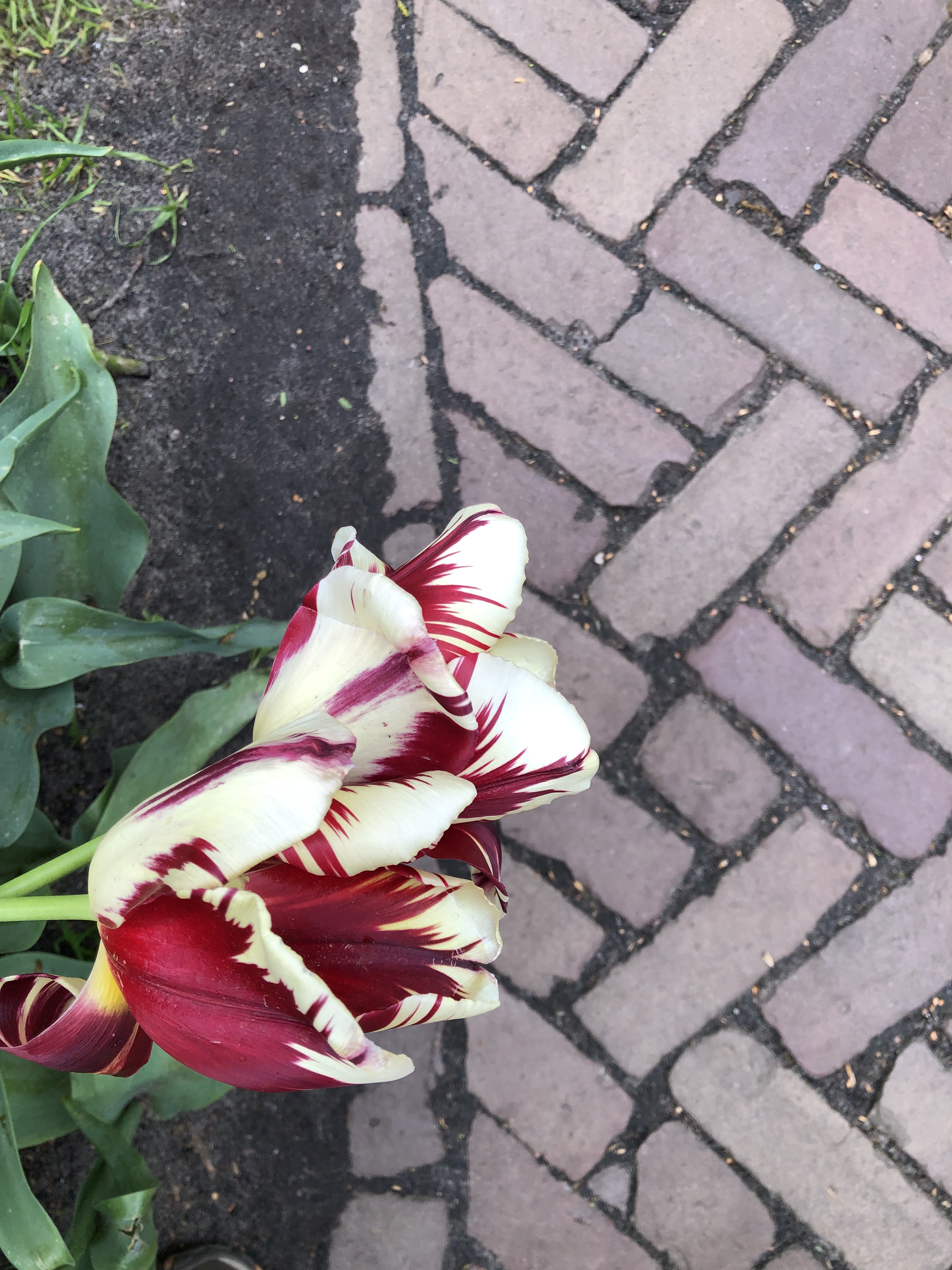
 A broken tulip
Leave a reply to moragnoffke Cancel reply