
I’m sitting on the carpeted floor, listening to a sermon on James covid-style, in comfy clothes. The pastor says that James is quoting the Old Testament when he says, “God opposes the proud but gives grace to the humble.”
Here’s what reading Scripture does to you, though—one quote to the Old Testament had my mind scattering a million ways.
Is James intentionally riffing off of Mary’s song (Luke 1:46-55)? Why was it so important to Mary—her first and longest outburst of speech in our Scriptures—to declare God’s grace to the humble and his provision for the hungry?
Arrogance drives sin, the pastor says. He goes on to talk about arrogance and envy coming from a perceived lack of resources. A poverty mentality. A scarcity mentality. One that takes and takes and takes out of fear that there is not enough.
Mary’s song is a celebration of God coming to the humble and hungry. Humility receives and gives, knowing that there is more than enough. Is this what God finds so beautiful in the faith of women? Elisabeth Elliot’s definition of womanhood has resonated deeply with me for years because she spoke of what we are called to (rather than by what limits women). “Let me be a woman, holy through and through, asking for nothing but what God wants to give me, receiving with both hands and with all my heart whatever that is.”
When I think of her words, which I tucked away and treasured for years, it is Mary that I picture. Lifted hands, open heart. Let it be done to your maidservant according to your will. Mary, in that moment, the image and type of all of us who come to Christ, individually and collectively. Mary, whose words became the prayer of the church through millennia.
In Elizabeth Elliot’s wording—let me be a woman—the very being is a gift.
In Mary’s song she speaks in Exodus terms (the mighty arm of God deposing the proud from their thrones). She speaks in the language used on Mt. Sinai, when Moses begs to see God’s glory and is shown the name of God–“he has looked with favour on his lowly servant,” says Mary. Moses, too, was told by God that he was known by name and favoured. Moses turned that back to God and said, if that’s true, then show me Your glory. Go with us. Be ever-present.
Mary’s song reinterprets both these pivotal moments, and it is fitting. Her baby is Yeshua–the mighty arm of God who will save us, and he will grow to be a king who will rule forever on the throne of David, ever-present, God with us.
Do we understand how deep the gift runs? The Proverbs 31 woman gives freely to the poor and hungry, a hallmark of humility. She laughs at days to come—another sign of a heart free of fear. Abigail, Deborah, Lydia—they made choices out of a place of abundance. You would have thought Abigail’s fool husband getting them all killed would have scared her, but she saw what God was doing and she acted without fear. You would have thought that the prospect of war against a mighty enemy would be a reason to fear (especially when the captain won’t even go), but Deborah saw what God was doing and believed in an even more complete victory, instead of backing down. Lydia, wealthy and generous, opened herself to God and hosted a church in her home. The women who poured perfume on Christ’s feet at a shocking expense to themselves embody this generosity in the face of lack—this laughter in the face of the future—laughter like Sarah cradling baby Isaac. When women live like this, it hearkens back to the Garden. Why else would Eve be called life-giving?
Perhaps there’s a pattern of people turning into the opposite of their names. Adam, who means earth, ends up bringing sorrow and grief to the earth. Eve, who means life, introduced death. Noah, who means rest, finds rest in wine…resulting in shame and the cursing of a family line.
And yet God changes names and works through families to answer questions asked many, many years ago. We still journey towards our birthright of life as women. The pathway to that is humility.
Let’s just be clear in saying that men and women are equally called to humility in Christ. We all have our example the breathtaking humility of God Himself, made flesh in Jesus Christ. We also have the example of each other. This means that men within the church have the example of women—Mary, of course, but many others as well. And women have the example of men.
Even so, the humility of women seems to be particularly cherished by God in Scripture. Perhaps (and here’s where I process out loud) because it’s so unlikely. I’m not talking about humility as subservience or straight-up obedience, remember. I’m talking about humility being a heart that believes there is more than enough resources, that abundance is at the heart of everything, a heart that is not bound by fear or anxiety but lives into the future with hope and laughter. A heart that trusts despite all odds, all odds.
No one questions the fact that women have had the odds stacked against them for most of history and in most societies. They have less access to resources, across the board (a cause for fear and anxiety) while also more responsibility to care for those who need the resources—children, the sick, the elderly.
Enter Ruth. Case in point. She didn’t make choices out of the options (not) available to her, or the resources (not) likely to show up. The book of Ruth is actually about Naomi—and Ruth is the ezer (“helper”), the suffering servant, the Christ figure, and the redeemer of one bitter and burnt out old woman.
Ruth gives bereft Naomi a line of descendants and “is better than seven sons”. The language of Ruth’s storyline mirrors both Abraham (who leaves all for the promise of God—Ruth, on the other hand, leaves all without a promise) and Tamar (who was declared more righteous than Judah and through whom the line of kings entered the family). The genealogy at the end of Ruth clearly links her into this story as essential to bringing the promise God made to Abraham to fulfillment—there will be a king. (Sound a little like Mary?)
Ruth is called valiant, a warrior woman, the description that will appear again in the Proverbs collected by one of her descendants. Proverbs 31 will pick up that description “a valiant, warrior woman” and position an ode in her honour as the culmination of a book on wisdom embodied. This ode is recited weekly by Jewish men as families usher in the Sabbath.
All of this—all of this moving along of the story, the canon, the promise, the Eden reality of women and men together accomplishing God’s work—all of this happened because Ruth lived out of humility and bold initiative rather than poverty and fear. She was just one such woman. There were–there are–many.
Women, you may have more reasons to fear than the men you know. You may have more reasons to be anxious about where provision will come from for the future. You may have more reasons to worry about your daily safety. You may feel deeply a far greater responsibility for the needy and weak around you.
He knows. This is why you are called to humility. God loves the heart of a humble woman because it is among the most unexpected things on this earth, the most paradoxically strong. This is how and where he builds his kingdom, builds his story.
Humility in conversations about roles
Yes, this gets practical. There is no competition between men and women in Christ. Not in conversations about leadership, about scholarship, about home life, not anywhere. Humility has to be the hallmark of leaders (both men and women) and the foundation of all conversations about roles—and yes, I think that generally speaking many women who belong to “complementarian” camps will have to assess if they are expected to evidence an unhealthy humility and yes, I think many men who belong to “egalitarian” camps have to assess if they are shamed into an unhealthy humility.
Maybe the point is that humility, which is all about receiving abundance, is also a gift that is given. It isn’t something we can shame, guilt, or command anyone else into—men or women.
God Himself waits for our answers, our choices, as He waited for Mary. He comes so far to reach us, but even so He never forces us to accept Him.
And yet God loves even the faintest blush of humility in our hearts. He sees it and he welcomes it—he welcomes home the prodigal son, he welcomes Mary to sit at his feet as a disciple. He welcomes our return—always, always, always.
When did we stop seeing and welcoming the humility in each other, in other men, in other women? When did men stop looking to women for a powerful example of the life they are also called to live—and when did women stop paying attention to the focus of their own hearts in the whirlwind of arguments and hurt?
It will not be taken away from her, Jesus said of Mary’s position at his feet—he calls it the one thing that is necessary, and blessed is she for finding it.
Do not rebuke her! He said to the disciples who grumbled over the prostitute perfuming his feet. This will be told everywhere my gospel is told.
Do not rebuke her—do not touch her. Boaz said to his servants when Ruth came to glean his field.
Where are the men who stand up for the women who follow Christ and give him all—where are the men who name the life-giving acts of women as precious? Where are the men who take seriously the permanence of women in Christ’s body, that Mary of Bethany’s seat will never be taken away, that the prostitute’s story will always be told, that every generation will call mother Mary blessed?
These are just a few of the questions I ask myself when I get lost in the maze of hermeneutical debates over the submission of women.
When did we drift away from humility?
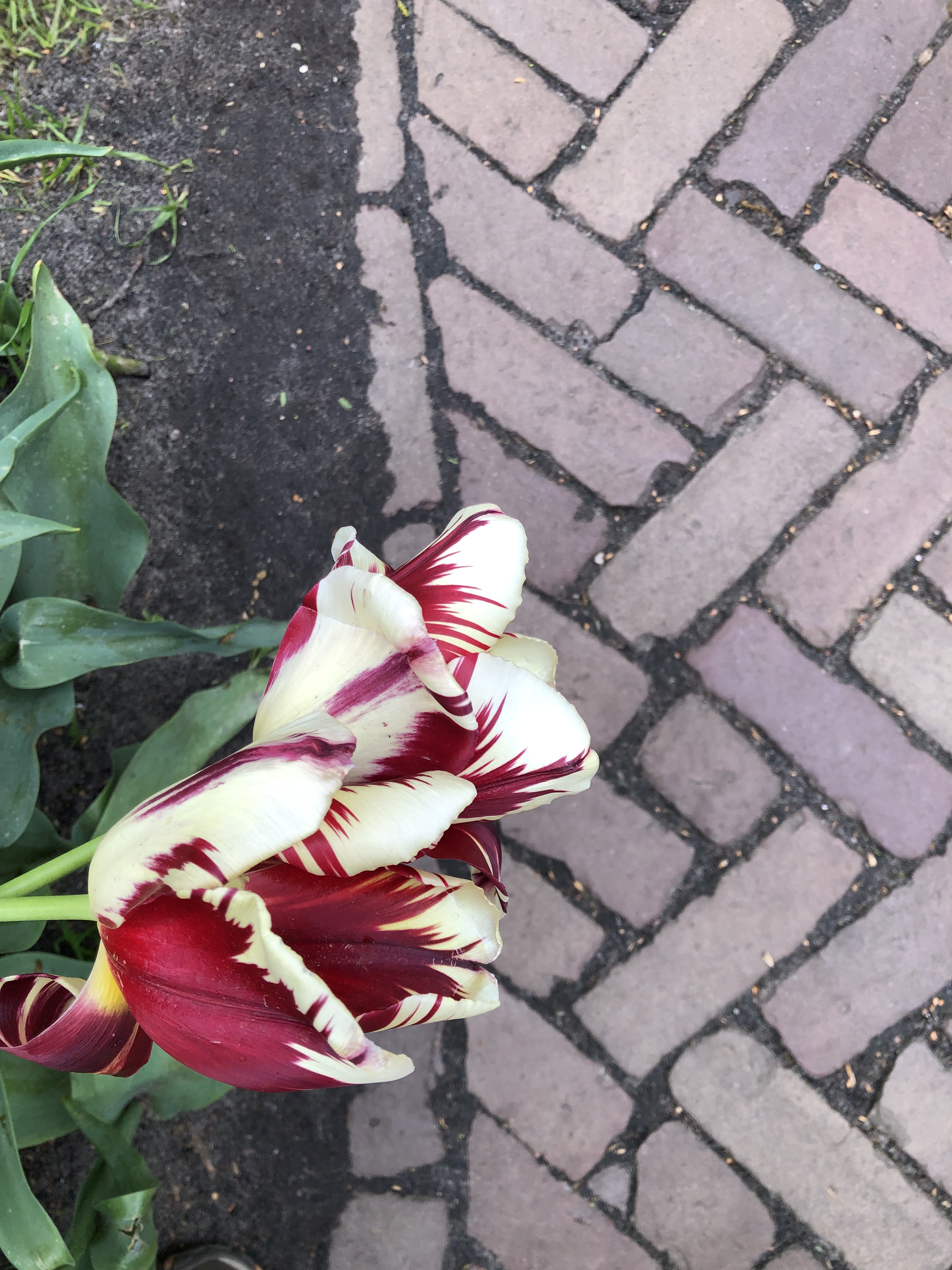
Photo by Ashley Byrd on Unsplash


 A broken tulip
Leave a reply to banabasiyakopela Cancel reply