
In how many ways are you broken?
Five days before Christmas I was walking on the fish farm where I worked. And then I wasn’t. I was on the ice, wrist throbbing that something was wrong. Very wrong.
The body expresses the human soul. This is my paraphrase of what the Russisan theologian Bulgakov said, on his way to talking about Sophia.
In the days after my right radial joint fractured, I started to count what my soul lost. First it was connection. I could no longer work alongside the other staff on the fish farm, and I lost their companionship. The ability to cook for others, share food with them, clean up the dishes was gone. I never realized how communal those acts are. I could no longer drive to visit a friend.
My soul lost its expression in physical, tangible ways: through writing, through art, through a job well done. I lost the ability to care for myself, needing someone else to tape up my cast before I stepped in the shower. Doing up my hair was impossible.
Humans are nothing if not adaptable. My friend picked me up. My sister-in-law chauffeured me across town. I used my teeth to open ziplocs and chopped vegetables with my left hand, hard and loud. I tapped into the freedom and untried spontaneity of my left hand and turned to abstract art. I painted the largest size of canvas I have with a whimsical house, a childish dog, a forest stamped with make-up sponges and bees pressed on with Q-tips. Without control of my left-hand, I had to rely on rulers, boxes, cups, to give myself the shapes I needed. With one hand I gathered, sieved, and pounded dirt from my family’s hikes into paint pigments.
The steps to re-learning as an adult involve an unlearning. To write with my left hand my brain had to shake loose the assumption that letters are drawn in a certain direction. I imagined I was writing mirror-image, and the words came out mostly right.
There was an adrenaline to finding that flexibility and creativity had been waiting for me all along, and that I wasn’t cut off.
That was the first two months. Then I learned that mistakes had been made. The initial adjustment didn’t hold. I have, to quote one of the five doctors who saw me, a wrinkle in my wrist. My joint is slightly misaligned, and no one can agree what that means—functional but not aesthetic, arthritis or no arthritis, incision surgery or leave it alone. Now that my wrist is free from the cast and still swollen, going on three, four months, I learn that they missed a fracture in my thumb and my hand was casted wrong. The healing process is hazed in a new kind of uncertainty. The specialists say: four weeks of physio, six weeks of physio, two months of physio, six months of monitoring. The horizon of healing is disappearing. The grief is catching up.
I am learning the Canadian system of medicine, that I need to find a specialist for everything wrong with me which means I have to know what is wrong. Is it joint or muscle, chiropractor or massage? The hand therapist can’t say whether my fingernail, weirdly shoved back into my finger, will grow out naturally. The general physio who saw me first isn’t allowed to advise me about the sharp pain riding my shoulders, since it he’s only authorized to work on my wrist.
We are whole beings made of so many. many parts. “Wouldn’t it be nice to go to someone who treated all of you?” a woman at church asked. Nerves and emotions, muscles and past traumas, bones and infections, nutrition and prayer. Instead we become professionals of ourselves, racing to piece the puzzle together before everything falls apart.
I can’t help but notice the parallels to society at large as the horizon of healing from a global pandemic fades away. Yesterday I interviewed three different people on their experience of the pandemic. “It was only supposed to be two weeks,” says one wryly. What has been lost?
What are you afraid to lose? If Descartes could know he existed because he thought, I know it because I can take the raw information the world hands me, and fashion it into something of my own. I create. Like many creators, this is how I contribute to community. I share back with others: a meal, a story, a painting, an experience.
Who would I be, if I lost the ability to carry those parts of my soul into the outside world? Who would I be without my right hand?
It is a question I would rather not think of. It is one that makes me vaguely guilty, operating on an assumption of health when so many may not do so. But if there is one thing that has terrified us in this pandemic, isn’t it the unasked questions? What scares us is what is unknown, what is unpredictable. The stakes could be so low or so high, and we’re unwilling to gamble our lungs and sense of smell and muscle strength away. We all know, somehow, that to lose the body means to lose something of the soul. Yet who will tally the collateral of this anxiety, in our communities and in our own bodies?
Hear this, anxious ones: our souls are resilient. Molly McCully Brown, a poet and essayist born with cerebral palsy speaks in interviews of befriending her physically limited body. She joined the Catholic church and in doing so grappled with the belief of the physical resurrection, that this my body will be my body in new creation and that that your body will be your body in new creation, and that even her body that the medical system has attempted for so long to “fix” is not, inherently, a problem. It is a gift.
No matter how your body changes, it will always be, at some level, a gift. It will shape you, yes. But the shaping need not dull your glory. You can receive the gift, and you can be received in turn by others in all your wonderful imperfection.
Grief is natural. For months I have held my wrist up and whispered the plea, “heal me.” To lose something you rely on is a transition, and transitions are dark and lonely places. But those like Brown who are our prophets and poets of the body, in its giftedness and limits, can show us hope. Don’t be anxious about what your body and soul may lose. It is only a pruning. You will grow back, more truly yourself, more vibrantly alive.
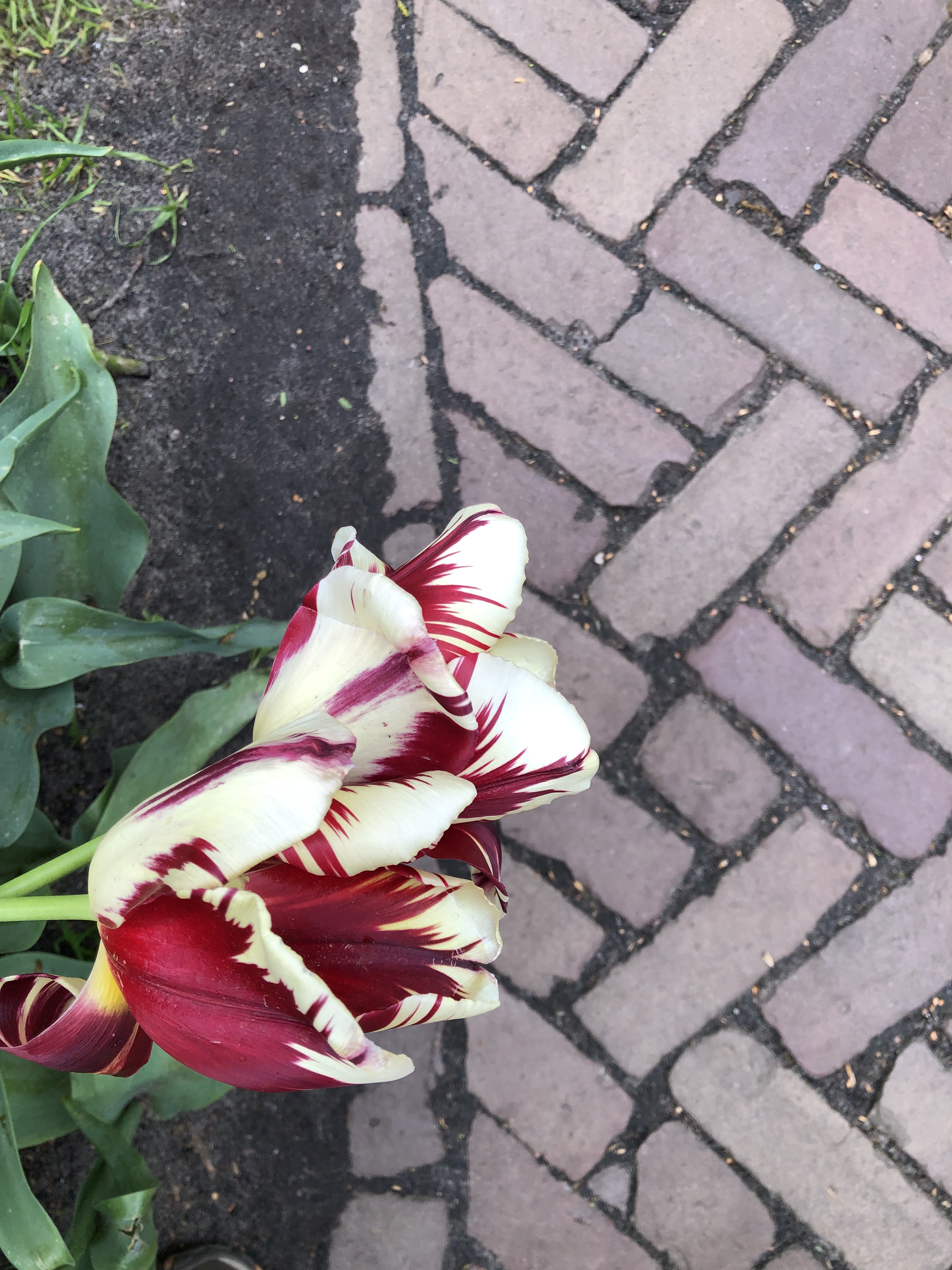
 A broken tulip
Leave a comment