
There’s a common argument in the Protestant church that I recently heard again from the pulpit. It goes like this: those issues Paul had with women speaking in church, fully celebrating their freedom in Christ? It was an eschatology realized too early. Basically: these women (and men) were reading the end of the story, where we all become joint-heirs in truth. And they brought the future into the present, except it messed up cultural norms and so muddied the proclamation of the gospel. To create a winsome message, women were told to be silent and to cover their heads.
I can kind of see the sense in that argument. I truly do respect the need to be culturally appropriate, and to be mindful of how our “freedom” translates into social responsibility. I have found comfort and value, for example, in head coverings and long skirts, and women-only balconies. But it frustrates me that a pastor, or an author, can say so bluntly that our future is not our present and then move on. No lament. No pause. No asking, “why will it take us until the end of all things to finally live in freedom with each other?” Surely if a Christian leader truly believed that half their church (the women) weren’t yet able to live in the freedom assured them in Christ, surely that leader would at least have the empathy to say a maranatha prayer for Jesus to come quickly, so that we could truly live in unity?
Maybe you’re reading this as a woman and you’ve internalized the message that God’s whisper in your Spirit is worth less than what a man hears. If you’ve been told that men can speak for God because “men are stronger/more responsible/less easily deceived/less emotional,” then you might have believed that you’re inherently flawed and worth less to God than a brother. Maybe someone just told you that the status quo is God’s will, and you should “accept it in faith.” And you understood that they didn’t even care enough about you to try to slow down and explain something. Question them, and it multiplies their frustration and your shame.
All of this creates a deep, deep disconnect. To discover that someone who claims to want your best can apply verses to your life to change your behaviour, or career plans, or marriage, or how you wake up and talk to God—and they don’t think it’s a big deal, or even worth talking about? It creates a chasm between the value God shows his daughters, and what his people show. If you’ve experienced this, you can believe that you’re not worth wrestling with Scripture for; that your worth is far less than a man’s in any tangible or real way.
But hear this: God suffered. Shaddai suffered silently, so that your name would not be changed to Bitter. And in the suffering and death that Christ endured, he emerged victorious with the right to seat at his table his mothers and his brothers. When he comes again, all believers will receive an inheritance as sons. Women will experience equal access to the Father, equal bearing of the name of Christ, equal inheritance. For us too, it is good news.
What knowledge is bought in suffering? The knowledge of what really matters.
In the Garden, when Jesus rose from the dead and Mary thought he was the gardener, Jesus addresses her and says, “Woman.” It was a statement. It mattered that there was a woman in the garden on Sunday, day one of the Creation cycle, the day the world began to be built again, this time in a way that could not be shaken.
And it mattered in that garden that, when she did not recognize his face, she knew him the instant he said her name: “Mary.”
He suffered so that you would know your worth. He suffered to include you in the work of new creation, to call you by your name.
Christians disagree strongly on what place a woman has in the family, church, and society. Some streams of the church re-tell in their liturgy, feasts, and prayers the stories of women in redemption history, Mary especially. Protestants generally don’t bother. But almost every group of Christianity agrees that one day we will all be together in a new creation, men and women truly equal before God. Free to serve and to be served, to give our best with no second-guessing and with the humility to accept that it’s only one part of a whole, but the joy to know that it’s a necessary part.
But now, we only have a glimpse of that reality. Abuse scandals are constantly emerging, in all denominations and churches around the world. The misuse of power runs deep, even in the church. Women were told to stay silent in churches by Paul to protect the cultural value of the gospel’s message. Today, women and men need to speak up about abuse and churches need to respond in real ways, if we are to have any credibility to the world.
One day, women will be known by their names. Job’s daughters were named at the end of his suffering; Ruth’s name was known in all the land after her sacrifice; Christ called Mary by name in the Garden after his long night.
All of us, men and women, will have a place. We will all belong. There will be comparing, no ego trips or abuse of power, no insecurity.
If you desire that freedom of belonging fully, that is a good thing. There is no shame in it. You sense what is wrong in this world and what will be made right. You’ve caught a glimpse of the mutual delight that is in our triune God, the delight that is breaking through into our world. You’ve sensed that power has been redefined, that service is meant to be given and not demanded. You’re hungry for the dignity of standing before God in a garden, and hearing your name spoken, and hearing that you are not a mistake, but very good. May you have the discernment to navigate the realities of your setting and your moment in time. May you equally have the tenacity to find your value in the light of God’s smile, no matter what you hear or experience.
Do I understand why the people of God and the creation of God must go through suffering and death to truly see each other? No, only that we follow Christ through death. Do I understand why the church is mostly complacent to live in the “not-yet”? No. But the church’s complacency cannot change the direction we are all headed towards, together. So wherever you are, hold on to the vision and pray, Maranatha. Come soon, Lord Jesus.
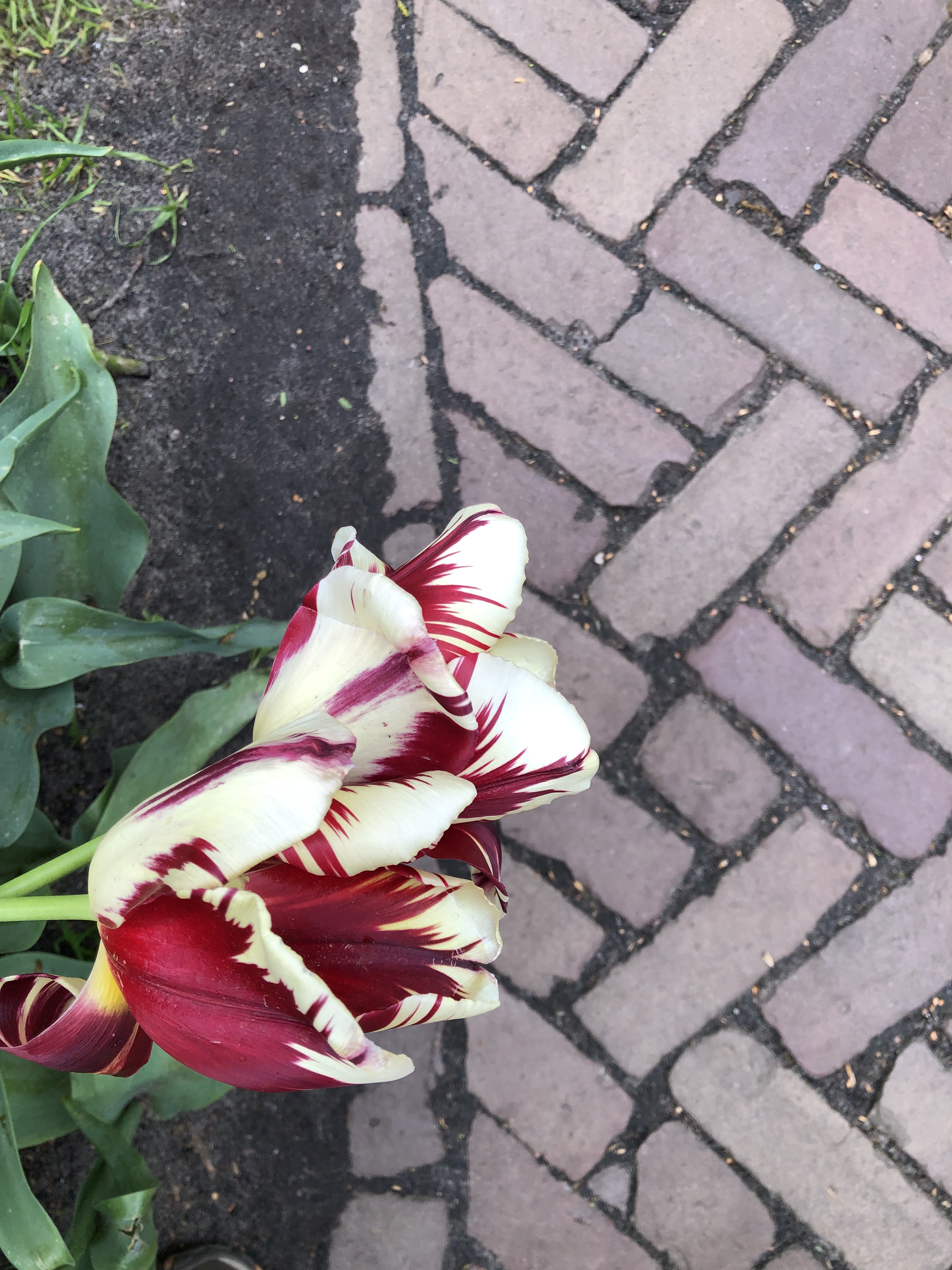
 A broken tulip
Leave a comment