They say you can find the whole story of salvation, Messiah, redemption in the first word of Genesis: Bereishit. In the beginning.
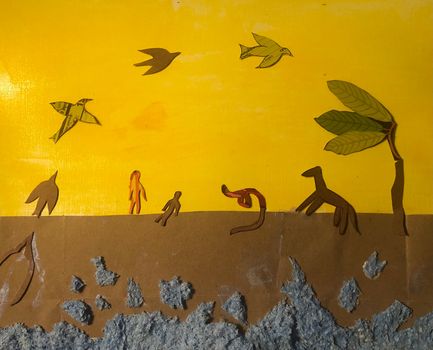
In the beginning, there was chaos and nothingness and the breath of God hovered above it all like a mother bird rustling over her young.
In the beginning the Word of God spoke, distinguishing and dividing and pushing apart: light from dark, sea from land, water from water.
In the beginning, the Word of God spoke, filling and joining and blessing: animals on the earth, birds in the sky, fish in the sea, trees on the earth, humankind, Sabbath.
This is the story of heaven and earth.
In the beginning God fashioned from the earth the beasts of the field and the birds of the air and God planted one garden.
That is the story of earth and heaven.
In the beginning God created human in his own image—man and woman He created them—and God blessed them and said to them, be fruitful and multiply and fill the earth and hold sway over it….
This is the story of heaven and earth.
In the beginning God created human from the dirt and breathed His Spirit into the dust-human. He set the dust-human in a garden to take care of it and He told the dust-human of the two trees in the middle. God brought to the dust-human all the beasts of the field to name and the dust-human saw that there was none like him. God brought a deep sleep on the dust-human and removed his side and fashioned it into another human and breathed into her. The dust-human woke and said, This one is like me, bone to bone, flesh to flesh. She will be called woman because she was taken out of man.
And so it is that marriage joins what is separate into one—takes two people to make them one flesh.
Now the two humans were in the garden, naked and unashamed…
That is the story of earth and heaven.
Go back to the beginning and you find all manner of things. When we arrive in Genesis we find mirrors of a story where the details change.
In one account, man and woman are created in one stroke, together as “human” and they are blessed, commissioned, and given authority to rule together. Man and woman, image of God.
This account comes first. Yet it’s not this account but the second that is elevated high by the people who claim that Adam is superior to Eve because he was created first (and therefore he alone received the words about the garden and ruling). The first is second, the second is first.
And in the second account, just as soon as the man and woman are declared one flesh the story picks up with them being two, separate. Something is off.
The book of Genesis is sectioned off by genealogies which tie together the entire narrative. Genealogies tell you: THIS IS THE STORY! They hold the DNA that unfolds in the chapters before and afterwards. We think of genealogies as human families but the first genealogy in Genesis is “the genealogy of heaven and earth” and it closes the first account of Creation. Then, the story does an immediate about-face and begins, “Now this is the genealogy of the earth and heavens…” and begins the marvelously complex, maddeningly elusive story of the Garden which is Genesis, chapter 2.
It reverses the order, and is almost a perspective shift from above to below. Everything else that follows in Scripture is part of this genealogy “of earth and heaven”.
I wish the genealogies of heaven and earth didn’t end so soon. I want them to continue. I’m hungry for more of that perspective—what did Creation look like from above?
But the Bible, which we call ‘God’s story’, is actually far more the story of us, of humans. God chooses to reveal Himself in a peculiar and slow way, by letting His Book be our story. From day one he holds true to His word of making us in His image, desiring unity with us. On page one, as soon as humans show up, he takes, as it were, the human perspective. He speaks and acts in response to humans, no matter how limited or warped their understanding of Him becomes.
And so Genesis begins a story which will twist and turn through the pages, and God lets it. It makes interpretation difficult. The difficulty forces each person in each generation to meet this God themselves and find their place in His story. It will not allow for mere rule-following.
I think the way God tells His story is beautiful. I think the fact that even our first chapters hold alternate stories points to deep truth. The very fact that He adopts our view and our broken lives to see it through, tells us what kind of God He is. It says that He has chosen to partner with us and not conquer us. It says that nothing and no one is too far gone for His redemption, however slow the journey home, and that He can find each of us, wherever we are.
We won’t stray too far into the story, though. Not yet. For now, we will stay here with Adam and Eve because it is in the Garden that our gender discussions get sticky (and then we drag our story-cart away from Genesis and the wheels track the stickyness throughout all the rest of Scripture).
So, to the Garden we go.
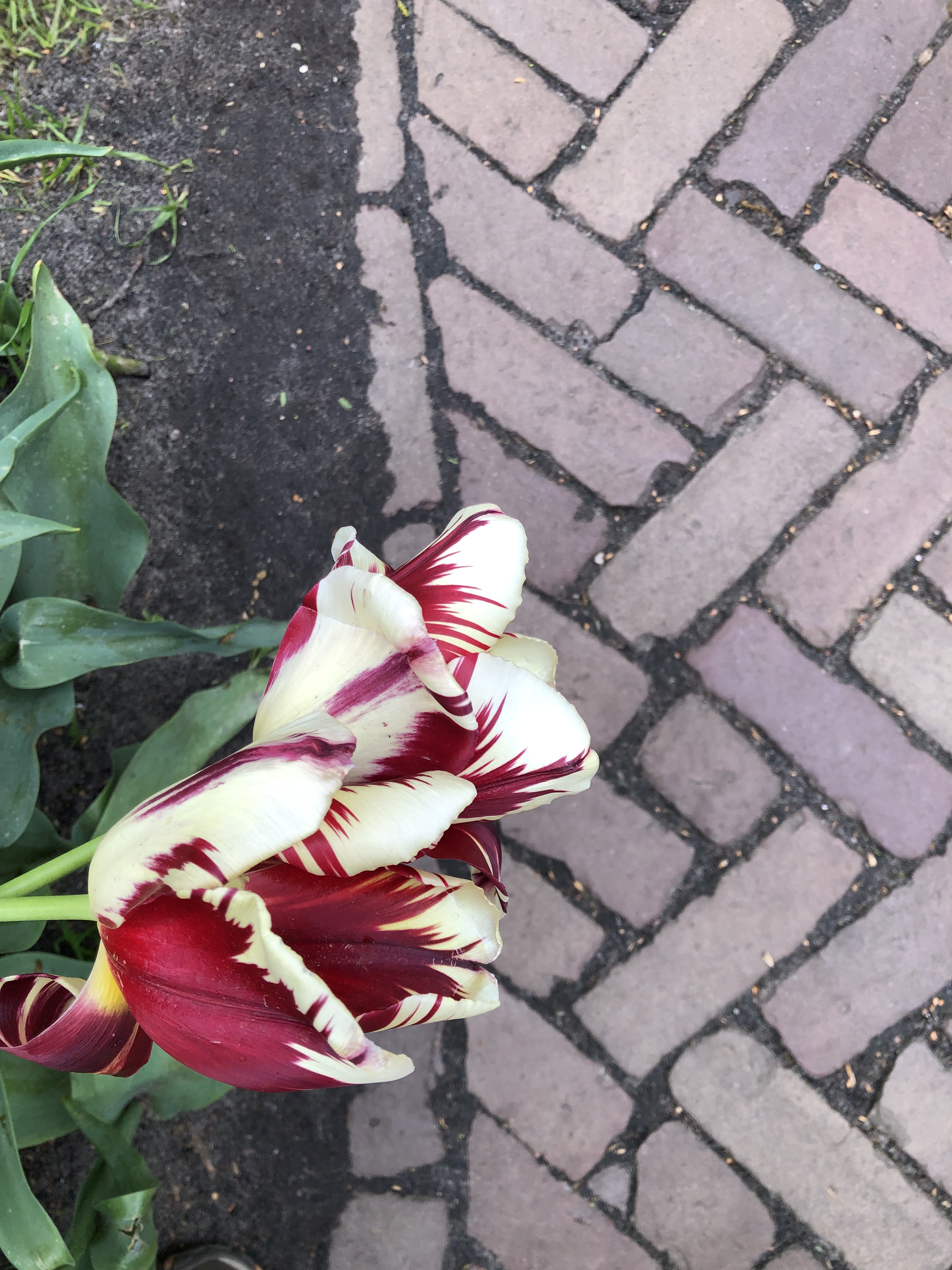
 A broken tulip
Leave a comment