It shouldn’t be a surprise anymore, the way there is always more to say. Try telling a story which involves a human being. Try representing well the complexity of this human—the complexity that blurs out into their situation—and that is exponentially increased by the presence of other humans who are in the picture. A hundred words can’t come close. A million words won’t do much better.
This is the frustration I face every time I am tasked with telling someone else’s story. I feel like I am cheating the readers from a full picture and falsely representing the person who is entrusting me with their story.
Last month I worked on a story where I felt this frustration keenly. My topic was Holland’s Occupation by Germany during World War II, and Holland’s Liberation. War and liberation stories have always been in the background of my childhood and life—unobtrusive but familiar, like wallpaper. Now I was interviewing four different individuals, each with a store of memories which required background research… which opened up aspects of World War II I had never heard of before. One man sent me pages of an unpublished book in Dutch. My Grandma helped me translate them into English, sentence by sentence. The pages were taken from the middle of the book and we struggled to know who the characters were, what their family relationships were, what exactly they were doing in resistance. Some sentences reminded Grandma of her own memories.
It felt like solving a mystery: each person who sent me the contact information of another person. Each black and white photo pulled from an old book and carefully handed over to me. Each story that began, “I remember….” All the while I researched historical events. I listened to Dutch folksongs written in the Summer of Liberation, trying to hear for myself the sounds of that summer.
A few days before my deadline I had a vast array of facts, stories, memories (some of these unhinged from context), and images. It was far, far too much. There was no central thread. Instead of writing my draft, I picked up paint instead:
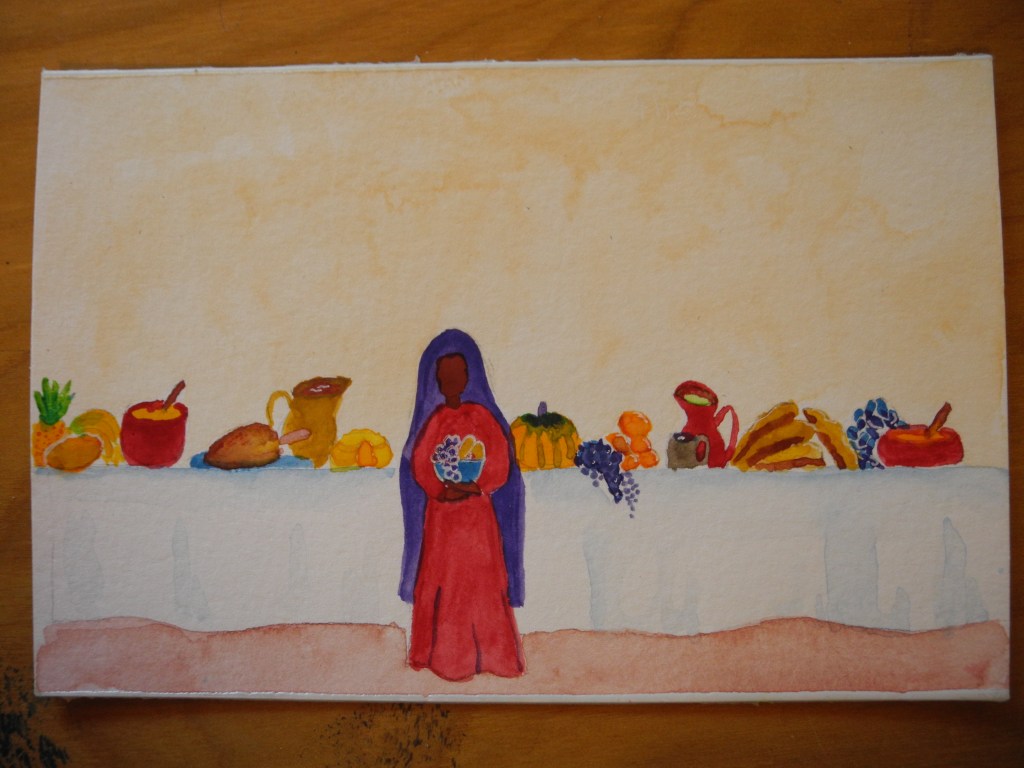
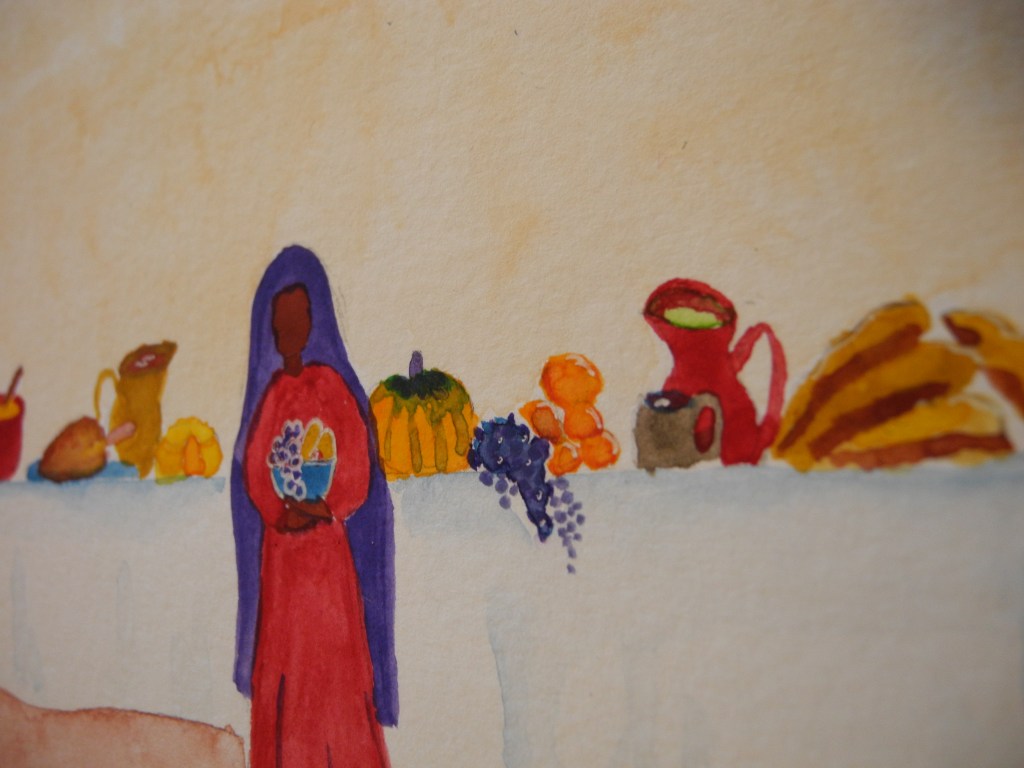
I needed this reminder. A storyteller—or a writer—needs to know much more than they tell. The power in their story comes from the choices they made. This is the challenge.
Do you know what makes a good storyteller? They stand at a feast table, loaded with bounty, and select just two or three items to offer a guest. They need to know how to pique interest without diminishing their subject. They need to know how to reveal complexity without overwhelming their reader. They need to know who their reader is, what gap in knowledge lies between the reader and the feast table, and then they need to weave a story that tells not too much and not too little.
How does one become a storyteller like that? I don’t know, but I’m pretty sure the answer includes practice, patience, and attention to detail. Things I’m not so good at. But I’m trying.
You can read my story here.
 A broken tulip
Leave a comment