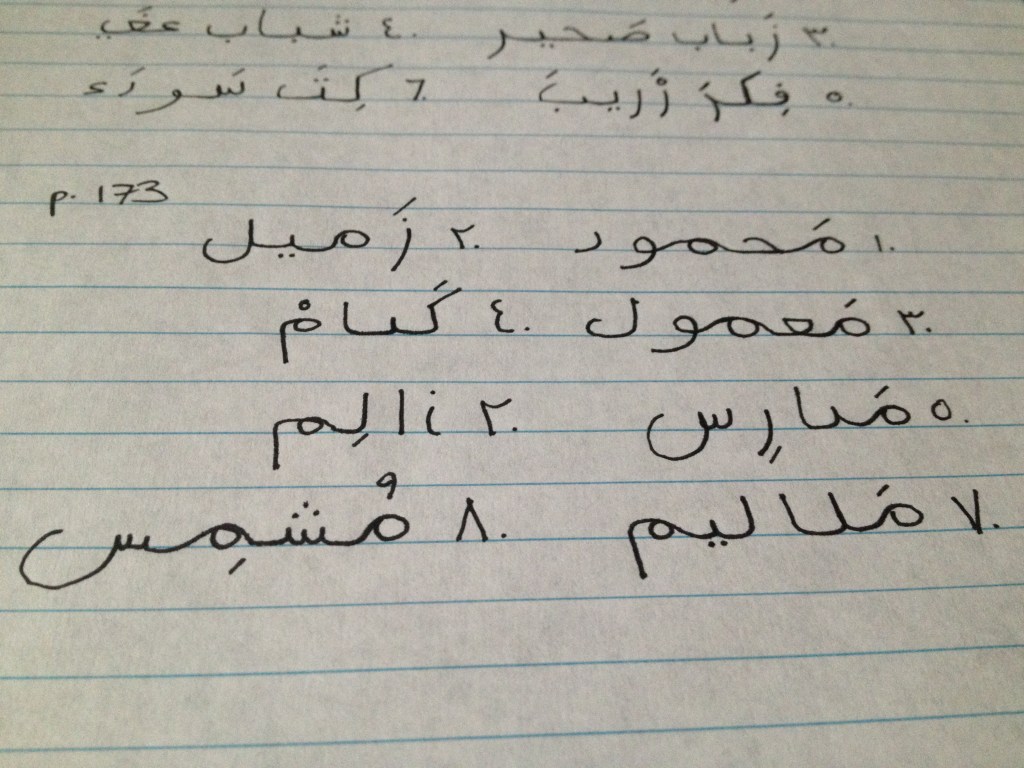
I am in the middle of House of Stone by Anthony Shadid. He writes about the experience of returning to Lebanon as a Lebanese-American to restore his grandfather’s house of stone. About the Arabic language, he says, “Words are imbued with both elegance and logic, chiseled by their sense of having moved through time, history, and generations. A beauty ensues, as words slowly unfurl their mysteries, shifting their meanings ever so gradually.”
It is a happy coincidence to read Shadid’s account while working on an essay about my own experience learning Arabic. Words unlock worlds. It was through Arabic words, the beauty of written Arabic, and the sonorous chant of surahs from the Qur’an that I began a journey to understand a world completely different from my own. The surprise was that it really wasn’t as different of a world as I expected.
Faces unlock prayer. As I remember my struggles with the Arabic language, learning about the fascinating (and complex) history of Islam, and my conversations with Muslim women – I recall the story of a Rabbi who was asked when night becomes day. This point of time was essential to pin down, as it was the moment for offering morning prayers. Not when colours are distinguishable, one from the other, and not when your own fingers are visible. When you look into your enemies face and see a brother, night has ended. Day is come.
This story is in Islam, too. Substitute Rabbi with Mufti, and the story of when night becomes day is told again. It reminds me of Jesus’ answer to the question, “who is my neighbour?”
Christians often tell that story. It becomes a moral story, be the Good Samaritan. Go show mercy. But that is not the story Jesus told. It was not the Samaritan but the Jewish man, beaten by thieves, whose shoes Jesus placed his audience in. It is a story not of showing mercy, but of being shown mercy. The “Samaritan” – the other, the detested, the one you do not speak to, deal with, touch — showed mercy. Jesus told the expert in Jewish law to go, to be like this Samaritan.
Maybe we do not recognize our neighbour when we are only bent on helping them. Maybe the humility of accepting an enemy’s help is a prerequisite to love your neighbour as yourself. Sometimes we do not even know our neighbour, until they help us see them truly.
“Who is my neighbour?” the young lawyer asked Jesus. By the end of the story, Jesus asks, “Who was the neighbour?” And the lawyer knows it is the Samaritan.
It is not only you who can be good and show mercy; you also must learn to receive the good that comes from unexpected sources. From your enemies.
You believed someone in this group could not conceivably be kind; here you are, bathed, wounds bound up, care taken, room and board payed.
Be like this person.
Open your eyes, see your brother — in seeing, recognize it as the call to morning prayer — then go, be like your brother.
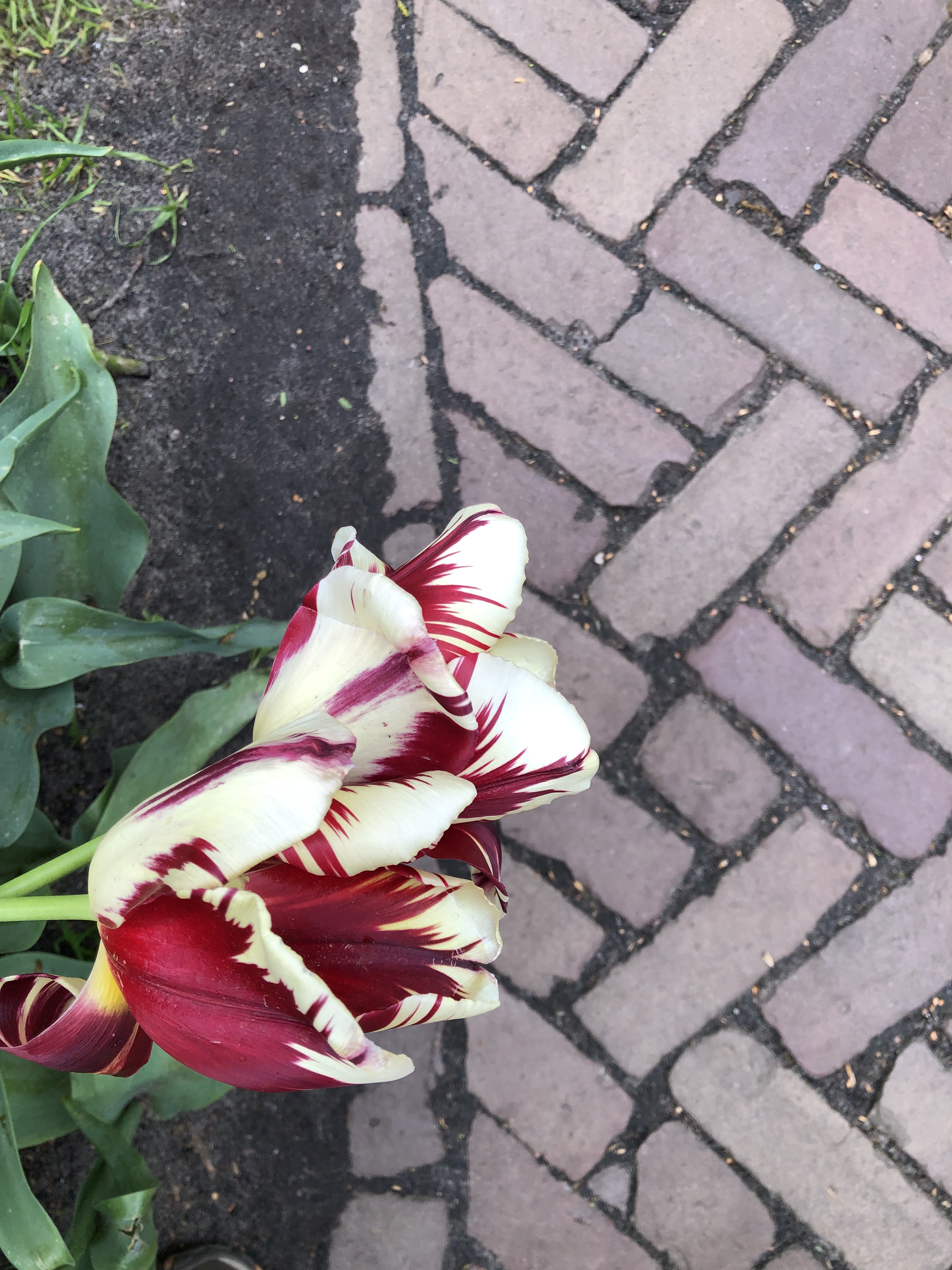
 A broken tulip
Leave a comment