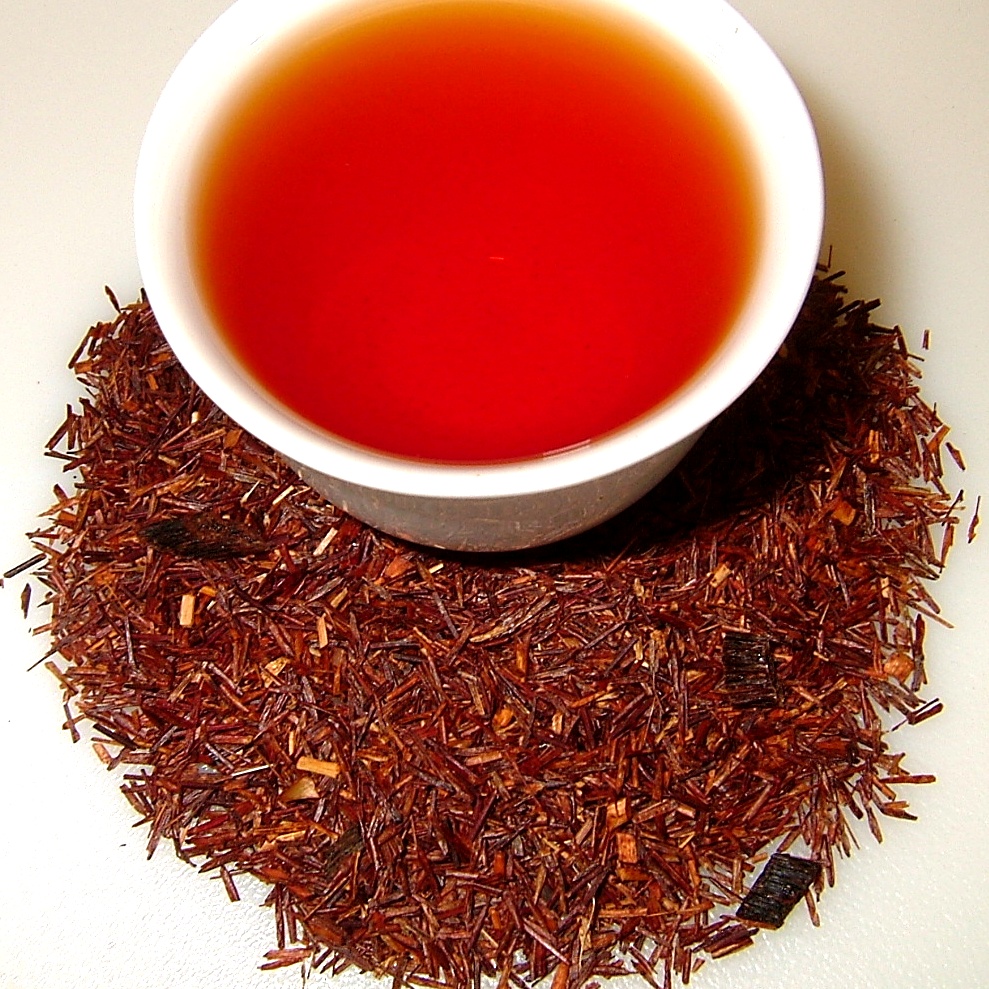
I love rooibos tea. A few years ago, the opposite statement was true. But then an Israeli friend with her own reasons to love the South African red bush tea would steep me a cup, hand it to me, and say, “It’s a healing tea.” On my trips back to Canada I would return with a fresh stash of rooibos tea for her.
Naming something is powerful; experiences are powerful. Kindness can re-write even your tastebuds. I love rooibos tea now, because every sip of it makes me think of kindness.
When I listened to the No. 1 Ladies Detective Agency series, I found M’ma Ramotswe’s love for her red bush tea to be contagious. As Alexander McCall Smith puts it, “So the small things came into their own: small acts of helping others, if one could; small ways of making one’s own life better: acts of love, acts of tea, acts of laughter. Clever people might laugh at such simplicity, but, she asked herself, what was their own solution?”
Small things, like a cup of tea, make a difference. So I wrote a poem about my cup of tea this winter morning:
the red tea tu
                          mbl
                                es
out of the blue iron tea pot
into the waiting, chipped mug
constellations swirl through the liquid
rooibos fragments dancing in the light.

It is an earthy tea, t h i c k,
as though steeped plant parts really do
dress water in a body, weight it down
on your tongue. I do not know the physics,
just the feel of the spinning circles
in my mug. I add
mushrooming clouds of milk.

Cautiously now, it     s     e t t l  e s ,  se  tt le s,   settl  es,  settles,
petals rest idle on the resting face,
while milk makes blotches
hanging lumpily down, sagging below the surface
                as if it were a celling and they
                        were chandeliers
                         in a red palace.
From above you only see
smudgy fingerprints,
a mug of children’s play.
*there are no petals in rooibos tea, but this particular loose-leaf tea was a spiced blend incorporating other plants with the rooibos. (and let’s be real, petal + settle was too good to pass up).
*I equally do not understand whether milk truly does hang in 3D lumps through a cup of tea, but it seemed like it could be the case.
While researching whether or not rooibos tea includes petals (it does not, as I just stated), I discovered some other, interesting facts:
In 1930, in South Africa, Dr Nortier cultivated the first tame rooibos plants. Rooibos seeds were notoriously difficult to find – and Dr. Nortier paid £5 per matchbox of collected seeds. A Khoi woman found some ants dragging rooibos seeds. She followed the ants back to their home – which was full of rooibos seeds.
Dr. Nortier discovered that if you scarify (think, lightly grind) the seeds, then they will germinate. According to Wikipedia, rooibos seed became the most expensive vegetable seed in the world (I did not know it was a vegetable?), and also according to Wikipedia, Dr. Nortier is considered the father of the rooibos tea industry.
Now you know.
Image credit: rooibostea.org (suitably)

 A broken tulip
Leave a comment