
Today the sky is introverting. It’s all wrapped up in a thick misty cloud, mumbling something about January and ungrateful people, and not delivering on even one of the multiple predictions made by the weather folk.
(Have you ever wondered about those weather folk, by the way? I used to picture them taping rulers into pails, and putting them in the backyard. They’d have to check those buckets with an umbrella (making sure not to intercept any rain drops) to make their measurements: “2 centimetres of rainfall today!” Imagine if one day, their golden retriever got outside and started drinking from the bucket. What a disaster! “1.5 centimetres plus roughly 3 dog laps of water today!”)
It is a good day for a good book. Academics is sure to drill into your head how important it is to credit your sources: the authors and research that influence you. Today I’m going to recommend a book to you. It’s not an influence per se – I only discovered it last week in the public library, squeezed between writer manuals, one shelf over from how-to-surf books (anyone else find it amusing that writing and water sport manuals share a library section?). I staggered out to one of the orange library chairs, holding a stack of at least twenty books. I started with the small, unassuming volume I chanced upon: The Beggar King and the Secret to Happiness, Joel ben Izzy. And I did not put it down until it was finished. In the process I laughed out loud and cried…neither of which is common behaviour for me in a public place.
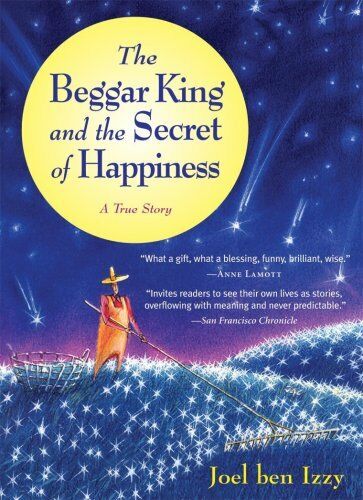
It’s hard to pinpoint how this little book caught me so off guard. I was hooked from the start, where ben Izzy begins with a folktale. Layered stories which weave folktales into a larger narrative are one of my all-time favourites (is it even a genre?). Think: Arabian Nights, Shadow Spinner, Haroun and the Sea of Stories. What ben Izzy accomplished is remarkable because he wove the folktales into a larger story that is true. The story of his own life: the life of a Jewish American storyteller who lost his voice, lost his stories, and had to learn again to live with questions.
Learning to ask questions is a theme that runs through the book. “Some like you wastes time looking for answers, when you should be looking for questions….What I’ve learned is that the answers come when they’re ready. The harder the question, the simpler the answer. For your question, it simply comes down to a single word. But there’s no point in guessing. The word by itself would be meaningless. First you must learn to love the question,” ben Izzy’s mentor tells him.
First you must learn to love the question. The relentless search for questions – and the ability to live with them – is probably the single greatest gift I received from listening to Rabbis for myself. I’ll write more about that some other day.
“There are stories in this world that need to rattle around inside your brain for twenty years before they reveal a final, hidden grain of truth.”
That is why we keep telling them, isn’t it? We keep rattling around with those stories, living the questions, until we find the grain of truth. I recommend that you pick up a copy of ben Izzy’s book from the library, curl up, and give it a read.
 A broken tulip
Leave a comment