
Sometimes words land on your palm and you tilt your hand forward, gentle, and let them fly. You pass along the bright things that come your way in life.
But sometimes the words are heavy. They must be planted deep. Darkness, time, and watering from the most unlikely sources can produce a surprising harvest. The challenge of heavy words is this: to share them honestly, you must grow with them. The soil you break to plant them must be your own life. If not, the core of your words will be hollow.
This week, I’m sharing heavy words. I have been turning them over for a time. I have tried to live into them. Lord have mercy. Now I share them, knowing that in speaking of forgiveness I am speaking of a matter far beyond my maturity. They are for you, friends, to take or to leave.
Recently a friend told me a Swedish folktale. In it a young wife unintentionally betrays her husband’s trust (incidentally, her husband is a talking polar bear). Her action relinquishes him to a curse. The troll queen whisks him away in a whirlwind. The young wife sets off to find the troll queen and reclaim her husband. It takes her fourteen years walking through snow in iron shoes before she finds the troll queen. Equally, for fourteen years, the husband has been imprisoned by the troll queen, using his imagination to delay the inevitable curse of marrying the troll princess.
(The ending is happy – not to give it away, but it involves magical eggs from the mother of the sun and the mother of the moon. In a refreshing twist, the heroic act the girl performs to free her tortured prince is…. you guessed it…. doing his dirty laundry. ;))
But that image — of walking through snow in iron shoes for fourteen years! Betrayal is heavy. It costs.
The story closely follows the Greek myth of Cupid and Psyche. Psyche goes weeping into the world after betraying Cupid’s trust. She must accomplish impossible tasks and suffer before the couple can be reunited. Through these toils, she is made both beautiful and divine. She joins Cupid in his true home.
In both stories the betrayer suffers greatly. So does the one betrayed.
And it begs the question: we, we who are finite creatures, bound to the surface of a tiny planet; how do we recover from betrayal? How do we reach out and forgive?
To forgive is to move into an action which only the divine and those in his image can do. It counters all animal instinct and all that is obvious to reason. To be shaped by love when it’s pain you’re intimate with – how does this happen?
Earlier this year I sat at the feet of one who was betrayed to death by his close friend. After you are wounded by a friend, self-pity can lead too easily to the construction of walls around the heart. These last years for me have been ones of grappling with the power—and the cost—of love.
After all, your city has been breached. Your heart, broken.
Where do you go from here?
When we narrow in on our own hurt we forget this: our human decisions drag death or life into the tiniest spaces and the echoes of our actions reverberate through all of eternity.
One choice, the fruit of desire, changed the world from Paradise to chaos. We are still choose. We still create chaos. We still restore glimpses of Paradise. We still long towards wholeness, but we are a long,
long way from home.
When you are the one reduced to chaos by the choice of another human, how do you stand then?
“In our ever present need for thee: Beloved, let us know your peace. Let us be your instruments that break every shackle, for do not the caged ones weep.
And give us our inheritance of divine love so that we can forgive like you. And let us be wise, so that we do not wed another’s madness and then make them in debt to us for the deep gash their helpless raging lance will cause.
Darkness is an unlit wick; it just needs your touch, Beloved, to become a sacred flame. And what sadness in this world could endure if it looked into your eyes?” (St. Francis of Assisi)
This meditation on betrayal and forgiveness is broken up between blog posts. Come back tomorrow to continue reading.
Image: Woonsook Kim, painting of Till We Have Faces (a beautiful and haunting retelling of Cupid and Psyche’s myth)
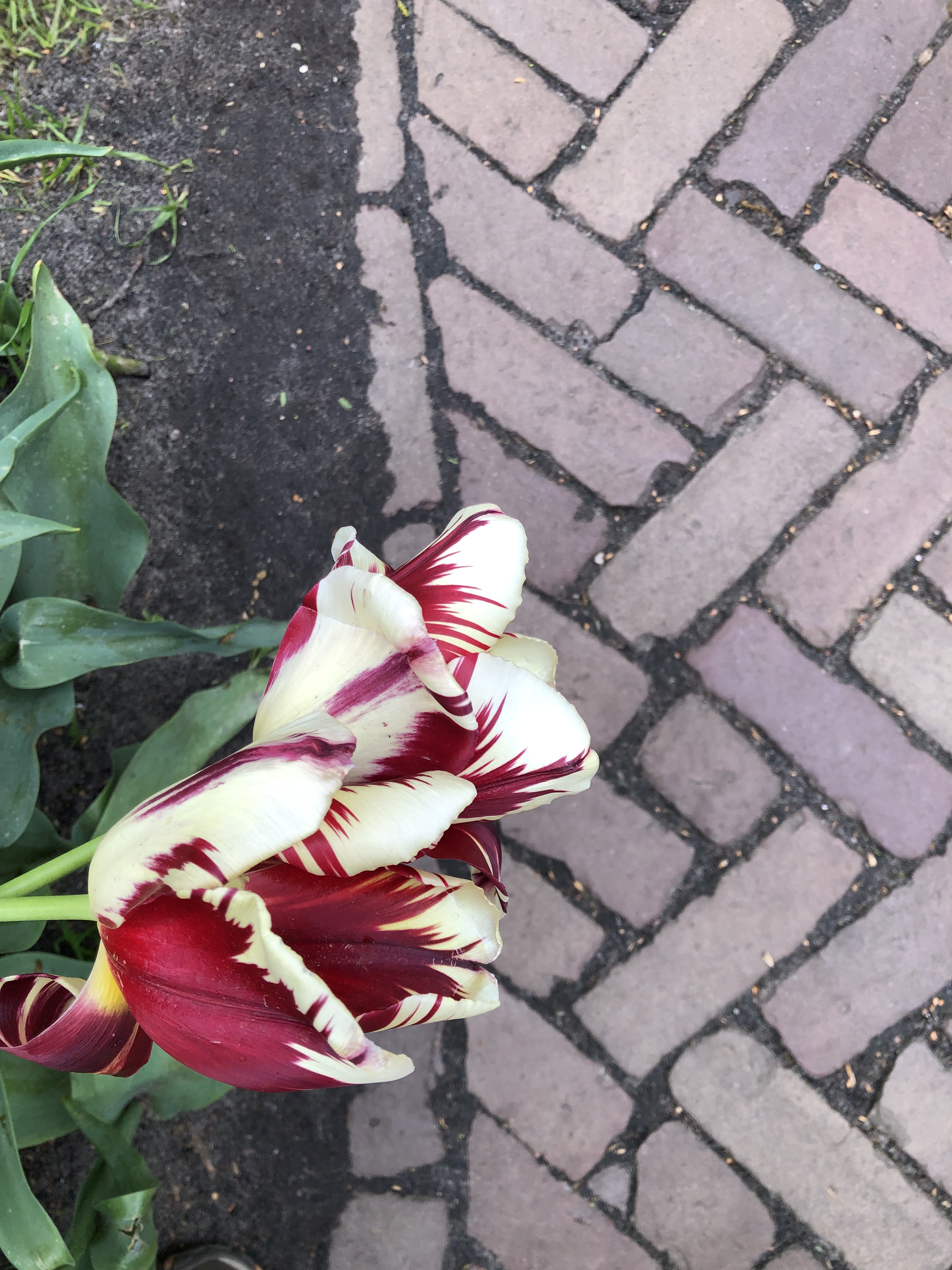
 A broken tulip
Leave a comment