
The passer-by treading a dusty road heard his sweet song of wet roses and sunrises. He plucked the singer, “such a song!” he said, and over the smooth feathers his hand closed.
The passer-by sold the singer to a lord in a hall of stone. And there he was made to sing without sky or grass, all alone.
But they did not like his song at the loud feasts and tables. It reminded them of mother’s lullabies, old true tales, and fables.
And in his voice the singer cried for sun and wind and sky. “Why do you weep, little man?” they asked as they passed him by.
Then one day they took him out, not for freedom but to take his sight. Hard and sharp steel pierced each eye. And they brought him back, robbed of light.
Again in his prison, the prophet perched mute, unseeing. Wild thing, belonging to no one, he is marked now maimed, dependent on mankind, never the same.
The men ate and laughed, forgetting the singer in the cage. Until the day he preened, stretched his wings, and began a song.
It was a song sweeter than sight, crystallized by night and pulled from the air (which is thick with songs we do not mind until blind prophets break our hearts)
Swelling, he sang throaty rejoicing over the coming day of the true king. A day of turning over tables, the beginning of a new feast.
He sang of prophets before him, the story of blind Samson praying for glory.
He sang of John the Baptist seeing the Lamb of God before tasting sharp steel.
He sang of the blind man who was blind not out of sin, knowing one thing before religious fools.
And he sang the story that all blindness, even the blindness of sin, would be turned to sight some day.
Finally, he sang of the apple of God’s eye, pierced with a spear. He sang of the song that soared from the silencing of sight – a song of no more blindness, of the gathering of yellow-feathered captive children into an army of musicians.
The men looked at each other over their beers and smiled. “It is just as they say,” one man cried,
“the canary sings loudest when blind.”
“Why,” added another, “it’s almost as if he knew what he was singing!”
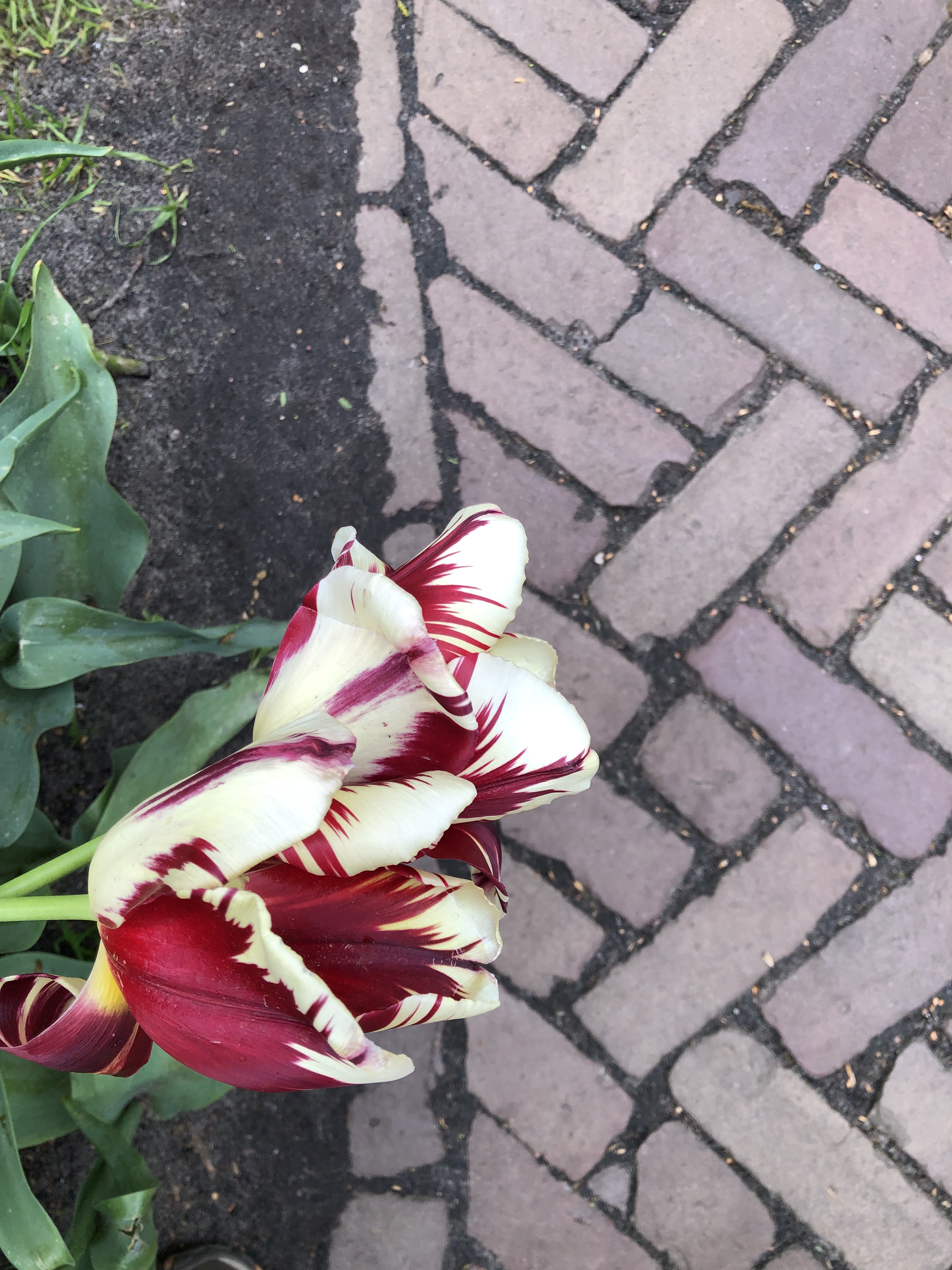
 A broken tulip
Leave a comment